


Assure Tech (Hangzhou) Co., Ltd was established by senior experts of in the in-vitro diagnostics industry in 2008. As a high-tech biotechnology company, Assure Tech is specialized in research & development, production, sales of diagnostic reagents, POCT and biological materials.
The company currently has R&D and manufacturing base, which contains the advanced level of colloidal gold diagnostic reagents production lines with annual production capacity of hundreds of millions of devices.
Why Choose Us?
Quality Products
Assure Tech (Hangzhou) Co., Ltd is reputed for its high-quality products. The company manufactures a wide range of products such as rapid diagnostic kits, medical equipment, and more.
Experienced Manufacturer
With over two decades of experience, the company has built a reputation for delivering quality products and exceptional customer service.
Innovation
Assure Tech (Hangzhou) Co., Ltd continuously invests in research and development to provide innovative technologies and products that meet customers' needs.
Competitive Pricing
The company offers competitive pricing to its customers, ensuring that they get value for their money.

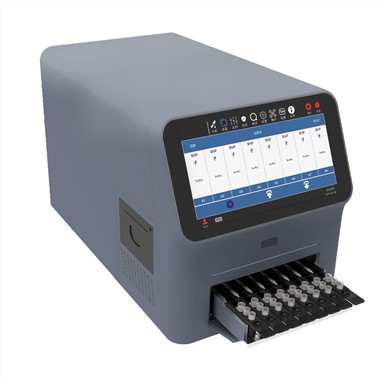


What Is Reader?
A:a device for projecting a readable image of a transparency
b: an electronic device that scans coded information (as on punch cards or bar codes) for storage or computation.

What Is Analyzer?
An analyser or analyzer is a tool used to analyze data. For example, a gas analyzer tool is used to analyze gases. It examines the given data and tries to find patterns and relationships. An analyser can be a piece of hardware or software.
Types of Reader
Fixed type reader
Fixed readers identify objects as they move through specific checkpoints in your process, like a dock door, manufacturing station, or conveyor. Fixed RFID systems also require antennas. Antennas provide the vital link between the fixed reader and tag, moving data back and forth.
Hand-held reader (handset)
The handheld RFID readers are equipped with integrated antennas and usually feature a display, making it easy to operate and interact with the data in real-time. Some handheld RFID readers, called sleds, connect to an Android or iOS device via Bluetooth to read tags, which further helps to reduce the cost.
Integrated reader (all-in-one)
Integrated readers are a reader and antenna all-in-one device that enables you to immediately transmit and receive data with the ability to read and write information onto RFID tags.
1.Stack flue gas ammonia analyzer
Normally, the ammonia slip should be limited to 10 ppm or less. Excessive ammonia injection may result in increased quantities of NOx in the flue gas. To monitor the ammonia slip amount, a diode laser gas analyzer is typically selected, which is based on a measuring principle of the specific light absorption of different gas components. Its in-situ cross-duct sensors are installed on the stack nozzles with a sensor control unit mounted in the associated CEMS shelter. It is suitable for fast and no-contact measurement of gas concentrations of the stack flue gas. Once installed, it will help monitor the SCR performance along with the NOx measurements.
2.Tdl analyzers (tunable diode laser analyzers)
TDL analyzers work by using a laser beam to excite a sample gas, causing it to fluoresce or absorb light at a specific wavelength. By measuring the intensity of the light absorbed or emitted, the analyzer can determine the concentration of the gas in the sample. The laser wavelength can be adjusted, or tuned, to detect a specific gas, allowing for selective measurements of individual gases in a mixture and are known for their high accuracy and sensitivity, even in low concentrations.
3.In-situ analyzers
In-situ analyzers can be portable or stationary, and may use various techniques such as spectroscopy, electrochemistry, or optical sensing to obtain measurements. The advantage of in-situ analyzers over traditional laboratory analysis is that they can provide real-time or near real-time results and do not require the sample to be removed from its environment.
4.Gas chromatograph (GC)
Gas Chromatography is an analytical technique used to separate and measure desired components (either organic or inorganic analytes) of process streams.
The analytical instrument that performs gas chromatography is called a gas chromatograph (GC). Typically, an inert carrier gas transports an exceedingly small amount of sample gas into packed columns or capillary columns to separate the components of interest.
The separated components pass through a detector (or detectors) to quantify them. Commonly used carrier gases are argon, helium, nitrogen, and hydrogen. Commonly used detectors are flame ionization (FID), thermal conductivity (TCD) and flame photometric (FPD). Selection of carrier gases and detectors depends on the application specific requirements.
GC can be used for any application where the target components are vaporizable, sufficiently separable through columns, and measurable on suitable detectors. The GC technique is used in nearly all major industries such as pharmaceutical, food and beverage, refining, chemicals, safety and environmental monitoring, and steel.
Benefits of Reader
1.Reader sensitivity: the reader achieves a sensitivity of -92 dbm at 1/1000 bit error rate, making it arguably the most sensitive reader on the market, ahead of its competitors in the industry.
2.Support for multiple Reader scenarios:such as Dense Reader Mode, or high-interference scenarios, the Reader can be adjusted to the environment of the interference Mode.
3.Can work in harsh environments: the reader has a strong, impact-resistant cast aluminum housing.
4.Simple and flexible:Recognition speed is fast, system size is small, reduce the cost.
Benefits of Analyzer
1.Accurate measurement:Analyzer can measure voltage, current, power, electrical energy and other electrical parameters, high accuracy, which is essential for accurate monitoring and analysis of power consumption.
2.Energy efficiency:by measuring the consumption of equipment or systems,analyzers can help identify areas where energy savings and efficiency can be achieved.
Troubleshooting:analyzers can help identify problems in the system or equipment, such as abnormal power consumption or harmonic distortion, and can be used to troubleshoot and correct problems.
3.Compliance:many countries/regions have regulations and standards on energy efficiency of equipment and systems, and analyzers can help ensure compliance by measuring and reporting power consumption of equipment or systems.
4.Cost savings:by identifying and correcting problems that lead to excessive consumption, power analyzers can help reduce energy costs and save money over time.


Components of Reader
Reader, also known as reader-writer, is an important part of UHF RFID system. Although it is called a reader, its function is not simply to read the label information so simple, the reader contains many auxiliary functions, such as host communication, IO control, and so on. The reader supplies power to the tag through electromagnetic waves radiated by the antenna, sends synchronous clock and GEN2 air interface commands, and receives the return data of the tag. The communication between the reader and the tag is half-duplex, that is, the reader can not receive the data returned by the tag when sending data to the tag. Although the reader is always in host mode and the tag is in slave mode while communicating with the tag, the reader is always working with the tag. When the label function upgrade, the reader needs to have the function of the operation command to implement new applications. When the sensitivity of the tag is increased, the receiver sensitivity of the reader needs to be doubled to achieve stable communication. For example, when the sensitivity of the tag is increased by 3 db, the backscatter (reflection coefficient) of the tag is constant, the reader needs a corresponding increase in sensitivity of 6DB to keep the forward and reverse link budgets equal. There are, of course, many reader issues that need to be addressed, such as the need for a reader to count thousands of tabs in many applications, at this time, the system requires the reader's sensitivity, anti-interference, multi-tag algorithm and so on. The reader is also improving and improving for different application scenarios.
Components of Analyzer
Analyzer: An analyzer consists of three things 1. character filters 2. filters and 3. tokenizer. An analyzer is basically a package of these building blocks with each one of them changing the input stream. So when indexing a document it goes through the following flow:
First one or more character filters can be added, a character filter receives a text field's original text and can then transform the value by adding removing, or changing characters. An example of this could be to strip out any HTML markup.
Afterwords tokenizer split the text into individual tokens which will usually be words. So if we have a sentence with 10 words we would get an array of 10 tokens. An analyzer may only have one tokenizer by default a tokenizer name standard is used which uses a Unicode text segmentation algorithm, which basically splits by whitespace and also removes most symbols such as commas, periods, semi-colons, etc. That's because most symbols are not useful when it comes to searching as they are intended for being read by humans. Besides splitting text into tokens, the tokenizer is also responsible for recording the position of the tokens including the start and end character offsets for the words that the tokens represent. This makes it possible to map the tokens to the original words something that is used to provide highlighting of matching words to positions of tokens is used when performing Fosi phrase searchs and proximity searches.
After splitting the text into tokens it runs through one or more token filters. the token filter may add, remove or change tokens.

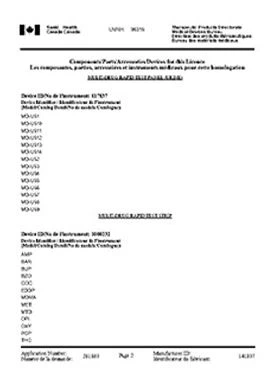
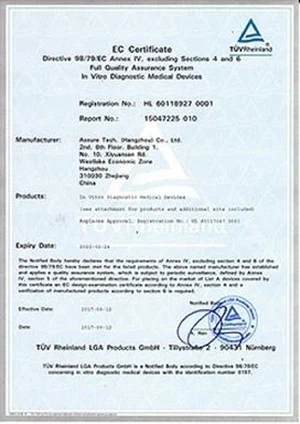
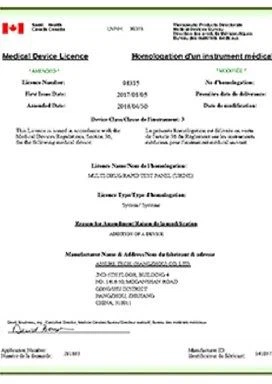
Certifications


Our Factory
Assure Tech (Hangzhou) Co., Ltd was established by senior experts of in the in-vitro diagnostics industry in 2008. As a high-tech biotechnology company, Assure Tech is specialized in research & development, production, sales of diagnostic reagents, POCT and biological materials.
FAQ
Q: What is an analyzer as a person?
Q: Which is correct analyser or analyzer?
Q: What is an analyser in optics?
Q: What is the difference between an analyzer and an analyst?
Q: Is an analyzer a good leader?
Q: How do I become an analyzer?
Q: What is an example of analyzer?
Q: What is the purpose of using an analyzer?
Q: What is analyzer in physics?
Q: What are the different types of analyzers?
Q: What is the difference between polariser and analyser?
Q: What is an analyzer engineer?
Q: What personality type is a controller?
Q: What companies use analyzer strategy?
Q: What is an online analyser?
Q: What is a process analyzer?
Q: What is a pressure analyzer?
Q: What is a discrete analyzer?
Q: What is a batch analyzer?
Q: What are the two types of logic analyzers?
We're well-known as one of the leading reader and analyzer manufacturers and suppliers in China. Please feel free to buy bulk high quality reader and analyzer at competitive price from our factory. For more information, contact us now.
COVID 19 IgG and IgM Rapid Test Device, DOA Saliva Test, Colloidal Gold Immunoassay Analyzer