


Assure Tech (Hangzhou) Co., Ltd was established by senior experts of in the in-vitro diagnostics industry in 2008. As a high-tech biotechnology company, Assure Tech is specialized in research & development, production, sales of diagnostic reagents, POCT and biological materials.
The company currently has R&D and manufacturing base, which contains the advanced level of colloidal gold diagnostic reagents production lines with annual production capacity of hundreds of millions of devices.
Why Choose Us?
Quality Products
Assure Tech (Hangzhou) Co., Ltd is reputed for its high-quality products. The company manufactures a wide range of products such as rapid diagnostic kits, medical equipment, and more.
Experienced Manufacturer
With over two decades of experience, the company has built a reputation for delivering quality products and exceptional customer service.
Innovation
Assure Tech (Hangzhou) Co., Ltd continuously invests in research and development to provide innovative technologies and products that meet customers' needs.
Competitive Pricing
The company offers competitive pricing to its customers, ensuring that they get value for their money.


What Is Tumor Marker Tests?
A tumor marker is any substance in your body that provides information about a cancer. Traditionally, tumor markers refer to proteins that cancer cells make. Noncancerous cells can also make tumor markers in response to a cancer. But a tumor marker can also refer to mutations (changes) or patterns in your DNA.
Benefits Of Tumor Marker Tests
Early Detection
These tests aid in the early identification of certain cancers, even before symptoms manifest. Early detection often leads to more successful treatment outcomes.
Diagnosis
Elevated levels of specific markers can signal the presence of cancer. However, a definitive diagnosis is typically achieved through further evaluations such as imaging and biopsies.
Monitoring
Tumor marker tests enable the monitoring of treatment progress. Changes in marker levels over time provide insights into the effectiveness of therapies.
Recurrence Detection
After successful treatment, these tests help detect any cancer recurrence or the reappearance of cancer cells.
Prognosis
Tumor marker levels offer insights into the probable course of the disease, aiding in predicting its trajectory.
Treatment Response
Changes in marker levels indicate whether a chosen treatment is halting tumor growth or even causing regression.
AFP (Alpha-fetoprotein): Using a sample of your blood, healthcare providers may look for this as they consider diagnoses of liver cancer, testicular cancer and other germ cell tumors, and to determine the success of treatment.
BCL2 gene rearrangement: Using a sample of your blood, bone marrow or tumor, healthcare providers may look for this as they diagnose and plan treatment for cancers like leukemia and lymphoma.
BRCA1 and BRCA2 gene mutations: Using a sample of your blood, saliva or tumor, healthcare providers may look for this as they diagnose and plan for screening and treatment of breast cancer and ovarian cancer.
CA 19-9: Using a sample of your blood, healthcare providers may look for this as they diagnose and evaluate the success of treatment for cancer of the pancreas, gallbladder, bile duct and stomach.
Carcinoembryonic antigen (CEA): Using a sample of your blood, healthcare providers may look for this if you have colon cancer as they determine the success of treatment or whether the cancer has spread or come back.
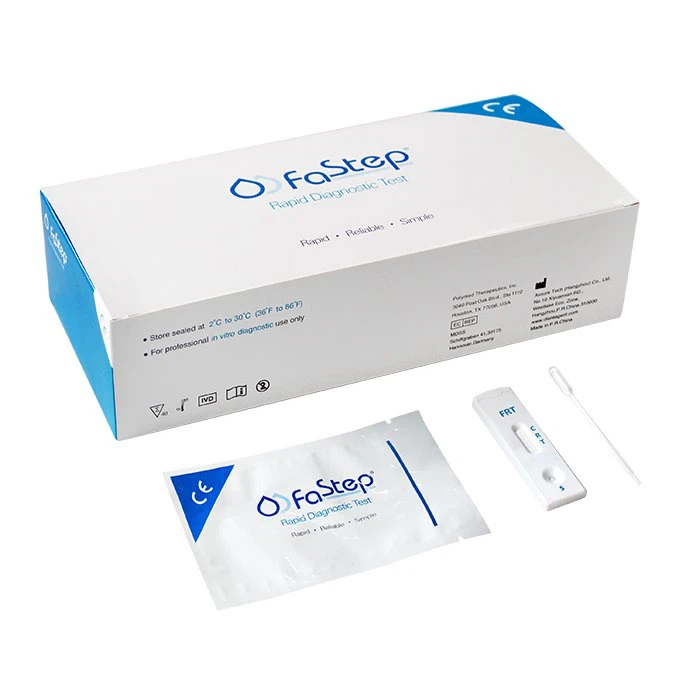

Fibrin/fibrinogen: Using a sample of your urine, healthcare providers may look for this to determine the success of treatment for bladder cancer.
Lactate dehydrogenase (LDH): Using a sample of your blood, healthcare providers may look for this to stage or determine the success of treatment for leukemia, lymphoma, melanoma, neuroblastoma and germ cell tumors.
Prostate-specific antigen (PSA): Using a sample of your blood, healthcare providers may look to help diagnose prostate cancer, determine the success of treatment or check to look if it's returned.
Thyroglobulin: Using a sample of your blood, healthcare providers may look for this if you've had thyroid cancer. They use it to determine how successful treatment has been or to check to see if the cancer came back.
UGT1A1*28 variant homozygosity: Using a sample of your blood or a cheek swab, healthcare providers may look for this if you have colorectal cancer. They use it to predict how sick you'll get (toxicity) from a chemotherapy drug called irinotecan.
How are tumor markers measured?
A doctor takes a sample of tumor tissue or bodily fluid and sends it to a laboratory, where various methods are .used to measure the level or presence (or absence) of the tumor marker.If the tumor marker is being used to determine whether treatment is working or whether there is a recurrence,the marker's level will be measured in multiple samples taken at different times during and after treatment.Usually "serial measurements," which show how the level of a marker is changing over time, are more meaningful than a single measurement.Some markers, such as the presence or absence of a particular genetic alteration that makes a tumor a candidate for treatment with a specific targeted therapy, do not themselves change over time. However, theproportion of tumor cells that have that alteration may change during and after treatment.
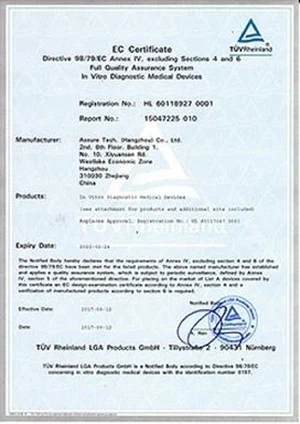
Certifications


Our Factory
Assure Tech (Hangzhou) Co., Ltd was established by senior experts of in the in-vitro diagnostics industry in 2008. As a high-tech biotechnology company, Assure Tech is specialized in research & development, production, sales of diagnostic reagents, POCT and biological materials.
FAQ
Q: What does it mean if you have a tumor marker?
Q: Do cancer markers show up in routine blood work?
Q: Should I be worried about tumor markers?
Q: Is a Tumour marker serious?
Q: Do all cancers have tumor markers?
Q: What blood test detects early cancer?
Q: What is the hardest cancer to detect?
Q: What happens when tumor markers go up?
Q: Is it normal to have tumor markers?
Q: What is the normal range for tumor markers?
Q: What is the number 1 symptom of cancer?
Q: What are red flags of a cancer?
Q: What test shows all cancers?
Q: Can inflammation cause tumor markers to rise?
Q: What cancers does CA-125 detect?
Q: What is the best blood test to detect cancer?
Q: Can a CT scan detect cancer?
Q: What are the top 3 deadliest cancers?
Q: Which cancers spread the fastest?
Q: Can stress increase tumor markers?
We're well-known as one of the leading tumor marker tests manufacturers and suppliers in China. Please feel free to buy bulk high quality tumor marker tests at competitive price from our factory. For more information, contact us now.
Alpha fetoprotein Rapid Test, Prostate Specific Antigen Rapid Test Device, Transferrin Rapid Test