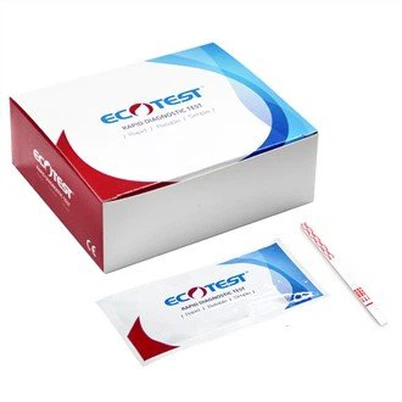
Leptospira IgG/IgM Rapid Test
Leptospira IgG/IgM Rapid Test (Serum/Plasma) is an in vitro diagnostic rapid immunochormatographic assay for the qualitative detection of specific IgG and IgM anti-Leptospira in human serum and plasma specimens.
Description
Intended Use
Leptospira IgG/IgM Rapid Test (Serum/Plasma) is an in vitro diagnostic rapid immunochormatographic assay for the qualitative detection of specific IgG and IgM anti-Leptospira in human serum and plasma specimens. Leptospira IgG/IgM Rapid Test may be used as an aid in the diagnosis of Leptospira. Testing results should be confirmed by other supplemental assay(s).
Introduce of Leptospira
Leptospira is an infection caused by corkscrew-shaped bacteria called Leptospira.[1] Many different kinds of wild and domestic animals carry the Leptospira which are spread through infected animals’ urine.2-3Leptospira can potentially result in life-threatening infections of the kidney, liver, brain, lung, and heart.
Leptospira is abiphasic disease.4The first phase ends after 3–7 days of illness.5The second phase starts with the resolution of symptoms and appearance of antibodies.6In humans, Leptospira can cause a wide range of symptoms like high fever, headache, muscle aches, rash and so on. Many of these symptoms can be mistaken for other diseases. In addition, some infected persons may have no symptoms at all.
Leptospira can be diagnosed by looking for antibodies against the Leptospira or finding its DNA in the blood. Rapid detection ofLeptospiracan be done by detecting the IgM antibodies. Presence of IgM to the Leptospira antigens suggest current infection, whereas, IgG corresponds to late stage of infection or past infection7. The Leptospira IgG/IgM Rapid Test uses conserved recombinant antigens to simultaneously detect IgG and IgM to the Leptospira without the restriction on specimen collection.
Warnings and Precautions
● Do not use the test beyond the expiration date.
● Do not use the test if the packaging is damaged.
● Apply standard biosafety precautions when handling and disposing of potentially infectious materials.
● Handle all specimens as potentially infectious.
● Wear protective clothing such as gloves, laboratory coats, and eye protection when specimens are being assayed.
● The test cassette and accessory should be disposed in a proper biohazard waste container after testing.
● Do not eat, drink or smoke in the area where the specimens and kits are handled.
● Avoid splashes and clean up spills immediately with appropriate disinfectant.
● The buffer contains 0.02% sodium azide as a preservative which may be toxic if ingested. When disposed of through a sink, flush with large quantities of water.
● Avoid cross-contamination of specimens by using a new specimen collection container for each specimen obtained.
● Humidity and temperature can adversely affect results.
● Used testing materials should be discarded in accordance with local regulations.
Storage and Stability
● The kit should be stored at 2-30°C until the expiry date printed on the sealed pouch.
● The test must remain in the sealed pouch until use.
● Do not freeze the kit.
● Protect the kit from humidity.
● Care should be taken to protect the components of the kit from contamination. Do not use the test if there is evidence of microbial contamination or precipitation. Biological contamination of dispensing equipment, containers or reagents can lead to false results.
Test Procedure
Bring the test cassette, buffer and specimen to room temperature (15-30°C) prior to testing.
1. Remove the test cassettefrom its sealed pouch and use it as soon as possible. For best results, the assay should be performed within one hour.
2. Place the test cassette on a clean, level surface. Label with specimen ID.
3. Using the provided disposable dropper, draw the specimen up to the Fill Line, and transfer all the specimen (approximately 5 µL) into the specimen well of the test cassette, then add 2 drops of buffer and start the timer.
Avoid trapping air bubbles in the sample well (S), and do not add any solution to the result area.
4. Wait for the colored band(s) to appear. Read results at 15 minutes. Do not interpret the result after 30 minutes.
Hot Tags: leptospira igg/igm rapid test, China, suppliers, manufacturers, factory, bulk, Enterovirus 71 IgM Rapid Test, Brucella Rapid Test, Leptospira IgG IgM Rapid Test
Send Inquiry
You Might Also Like