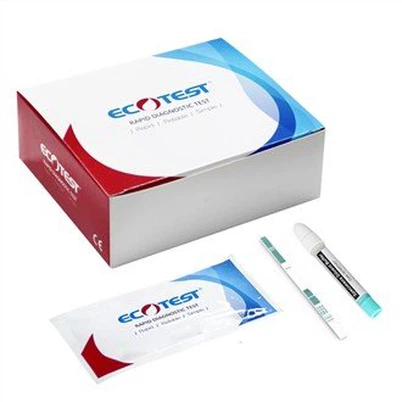
Enterovirus 71 IgM Rapid Test
Enterovirus 71 IgM Rapid Test (Whole Blood/Serum/Plasma) is an in vitro diagnostic rapid immunochormatographic assay for the qualitative detection of specific anti-EV71 IgM antibodies in human whole blood, serum and plasma specimens. Enterovirus 71 IgM Rapid Test may be used as an aid in the diagnosis of the viral infection of EV71.
Description
Intended Use
Enterovirus 71 IgM Rapid Test (Whole Blood/Serum/Plasma) is an in vitro diagnostic rapid immunochormatographic assay for the qualitative detection of specific anti-EV71 IgM antibodies in human whole blood, serum and plasma specimens. Enterovirus 71 IgM Rapid Test may be used as an aid in the diagnosis of the viral infection of EV71. Testing results should be confirmed by other supplemental assay(s).
Introduction
Enterovirus 71 is a single stranded RNA positive strand virus from the Picornaviridae family. EV71 infections can cause a wide range of symptoms and is most common in children under the age of 5. The most common feature is hand-foot-and-mouth disease (HFMD). Other symptoms that can occur from EV71 are upper respiratory infections, fever, gastroenteritis, bronchiolitis, and pneumonia.
Although this viral infection usually has no life threatening, EV71 infections can also cause neurological and systemic complications such as aseptic meningitis, acute flaccid paralysis, and encephalitis, which can be severe and even fatal. Children can develop these symptoms in a matter of hours to days1.
Transmission of EV71 is through direct contact of discharge from the nose, throat, saliva, and blisters or stools of infected persons. The infection is most contagious during the first week of the illness2, but fecal matter can continue to contain viral particles for up to 11 weeks1.
After direct contact with EV71, the virus must be able to replicate itself to reach an infectious dose. The incubation period is 3 to 10 days. Colonization is located in the GI tract or the respiratory tract. Initial replication begins in the intestinal tract. The virus then spreads into the bloodstream by the third day of infection. The virus then spreads to organ systems, causing a second viral infection episode on days 3-7. The infection can further progress to the CNS in more severe infections.3
By the late 1990s, large outbreaks occurred in the Asia-Pacific region. In many areas in the Asia-Pacific region, cyclical epidemics have occurred every 2 to 3 years. Thus far, outbreaks of EV71 arise at a low level in the Africa, Europe, and the US.4
For diagnosis of EV71 infections, the most efficient approach for diagnosis is throat swabs and swabs from at least two vesicles or from the rectum for patients with no vesicles. Virus isolation by cell culture and subsequent identification have been used as the gold standard of laboratory diagnosis of enterovirus infection. In cases that have CNS involvement, lumbar punctures are essential for diagnosis1. However, these procedures are time-consuming and require specific reagents and equipments.
The EV71 IgM Rapid Test Device takes only 15 minutes and specimens including serum or plasma can be used to perform the detection. It is an easy, rapid and sensitive diagnostic method for EV71 infection.
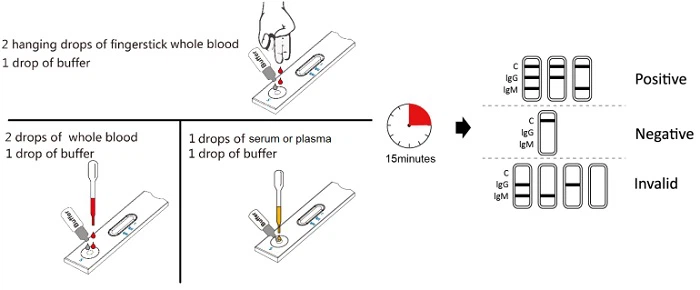
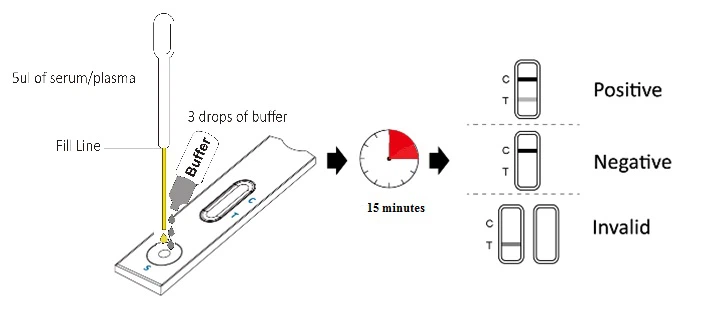
Test Procedure
Hot Tags: enterovirus 71 igm rapid test, China, suppliers, manufacturers, factory, bulk, Brucella Rapid Test, Enterovirus 71 IgM Rapid Test, Leptospira IgG IgM Rapid Test
Send Inquiry
You Might Also Like