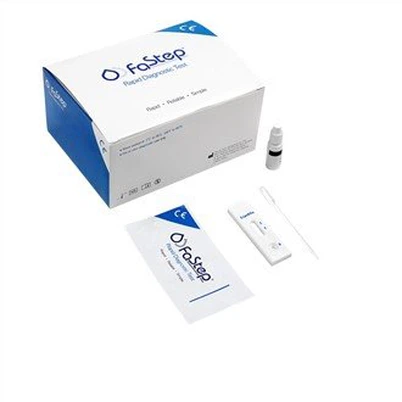
Norovirus GI+GII Rapid Test
Norovirus GI+GII Rapid Test (Feces) is an in vitro immunoassay for the direct and qualitative detection and differentiation of GI and GII norovirus antigens from human feces.
Description
Intended Use
Norovirus GI+GII Rapid Test (Feces) is an in vitro immunoassay for the direct and qualitative detection and differentiation of GI and GII norovirus antigens from human feces.
Norovirus GI+GII Rapid Test is intended to aid in the rapid diagnosis of norovirus infection. Negative results do not preclude norovirus infection and should be confirmed via molecular assay.
Introduction
Noroviruses are the leading cause of nonbacterial gastroenteritis outbreaks in children and adults worldwide and rank as the second most common viral agent of sporadic diarrhea in all age groups1. Viral infection can afflict more severely the elderly, young and immunocompromised patients2. Noroviruses, belonging to the family Caliciviridae, comprise a group of genetically diverse RNA viruses with single-stranded RNA. Noroviruses are divided into five genogroups (G), of which only three (GI, GII, and GIV) are pathogenic to humans with the genotype GII.4 responsible for the majority of norovirus infections globally3. Noroviruses commonly isolated in cases of acute gastroenteritis belong to two genogroups: GI including Norwalk virus, Desert Shield virus and Southampton virus; and GII which includes Bristol virus, Lordsdale virus, Toronto virus, Mexico virus, Hawaii virus and Snow Mountain virus4.
After an incubation period of 1 to 3 days, the clinical manifestations are characterized by diarrhea lasting 12 to 60 h and is associated frequently with a variety of other symptoms such as abdominal cramps, nausea, vomiting. Less common symptoms including headache, low-grade fever, muscle aches and fatigue are also reported. The pathogens can spread from person-to-person by the fecal-oral route or through vomiting, and transmission by food and water is also well recognized5.
For many years, noroviruses have been diagnosed by electron microscopy, but more recently by reverse transcription polymerase chain reaction (RT-PCR) which enhanced the sensitivity of detection and has become the standard method for the diagnosis of noroviruses. However, RT-PCR is an expensive and time-consuming method that requires well-trained personnel and sophisticated equipment which are not routinely available in most clinical virology laboratories or in hospitals6. Besides, the clinical specificity of RT-PCR is often poor, as PCR can detect prolonged asymptomatic norovirus shedding for an average of 28 days after infection7. Serum specimens are not recommended for routine laboratory diagnosis of norovirus. If feasible and warranted for special studies, acute- and convalescent-phase serum specimens may be collected and tested for a greater than fourfold rise in IgG titer to noroviruses. Meanwhile, a number of commercial enzyme immunoassay (EIA) and immnuochromatography kits have been released in the market8.
Owing to the simplicity and rapidity which could be valuable during outbreak investigations, these methodologies have been described as an attractive supplement to RT-PCR methods9. The Norovirus GI+GII Rapid Test Device is a qualitative, lateral flow immunoassay for the detection and differentiation of GI and GII norovirus in human fecal specimens. The test is specific to norovirus antigens with no known cross-reactivity to normal flora or other intestinal pathogens.
Test Procedure

Hot Tags: norovirus gi+gii rapid test, China, suppliers, manufacturers, factory, bulk, Crypto and Giardia Combo Test, Giardia Lamblia Rapid Test, Salmonella Typhi Paratyphi Antigen Rapid Test Device, RV ADV NOV ASV Combo Rapid Test, Shigella Antigen Rapid Test, H Pylori and Transferrini and FOB Rapid Test
Send Inquiry
You Might Also Like