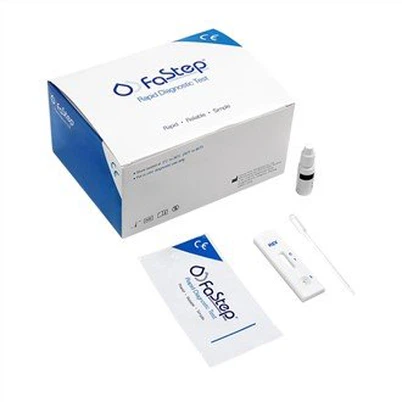
Three functions of HCG detection
Leave a message
HCG is a glycoprotein hormone secreted by villous syncytiotrophoblast cells, which begins to be produced after implantation at the blastocyst stage. HCG can be detected in the plasma of pregnant women about 10 days after conception.
During pregnancy, the placental chorionic tissue can produce a large amount of chorionic gonadotropin, which is excreted from the urine through the blood. Although the level of HCG in the urine is close to that in the blood, its concentration fluctuates with diurnal and may be due to the urine. Because the amount is large and diluted, there is a large error in its detection, so plasma HCG examination is often used to assist in the diagnosis of early pregnancy.
The examination of HCG is of great significance for the diagnosis of early pregnancy, and has a certain value in the diagnosis, identification and observation of disease course of pregnancy-related diseases, trophoblastic tumors and other diseases.
1. The diagnosis of early pregnancy
HCG can rise to more than 2500IU/L 35-50 days after pregnancy. It can reach 80,000 IU/L in 60-70 days, and urinary HCG in multiple pregnancy is often higher than that in single pregnancy. During the first trimester, HCG levels approximately doubled every (2.2±0.5) days, then decreased slowly until weeks 19-20, and then remained stable. Laboratory Medicine Network
In addition, HCG can also be used to determine multiple pregnancy.
2. Judgment of abnormal pregnancy and placental function
Ectopic pregnancy: such as ectopic pregnancy, the positive rate of plasma HCG is only 60%, usually combined with progesterone test, which can be used as an early diagnosis method. Laboratory Medicine Network
Diagnosis and treatment of miscarriage: In incomplete miscarriage such as placental tissue remaining in the uterus, the HCG test can still be positive; in complete miscarriage or stillbirth, HCG turns negative, so it can be used as a reference for fetal protection or uterine suction treatment. Laboratory Medicine Network
Threatened miscarriage: If the level of HCG remains high, miscarriage will not occur. If the level of HCG is low and gradually decreases, there is a possibility of miscarriage.
3. Trophoblastic tumor diagnosis and treatment monitoring
Patients with moles, malignant moles, choriocarcinoma, and testicular teratoma have significantly elevated HCG in urine. If HCG increases very rapidly, it indicates the possibility of moles and must be closely monitored. In patients with trophoblastic tumor, HCG should be less than 50IU/L 3 weeks after surgery, and it should be negative at 8-12 weeks; if HCG does not decrease or does not turn negative, it indicates that there may be residual disease. Such cases are often prone to recurrence, so regular inspections are required. .